Curiosity as an Extracurricular Activity
14 min readessayPersonal Philosophy
At 15, I represented Pakistan at a school Model United Nations conference. The agenda was whether religious education should be banned.
I had to understand and defend a perspective that wasn’t mine. So I started reading about religion, morality, philosophy and history. I even read the Quran.
Somewhere in that process, I stopped thinking about the speech. I wanted to figure out what I believed.
I remember being struck by how strongly people believed in their own religions. Each could be completely convinced that theirs was the truth. My teenage reasoning went something like this: if everyone believes their god is the one true god, and those beliefs contradict each other, how can any of them be right?
I became an atheist for a while.
I don’t present that as some airtight philosophical argument. It was how I was trying to make sense of things at the time. Eventually, I became agnostic. Questions about spirituality, the limits of scientific explanation, and why existence exists made certainty difficult for me in either direction.
I was supposed to be preparing for a school conference. I ended up examining my religion, changing my beliefs, and developing empathy for people whose beliefs were different from mine.
Another time, I represented Israel, and the topic was border conflicts. I began reading about the Second World War and the wars that followed. There was an emotional weight to the history that I hadn’t understood before. Understanding what people had experienced changed how I understood the positions they took. From both sides. Decades later, I see that pain in the Palestinian experience too.
The more I read, the less straightforward everything became.
At the time, my takeaway was that there was no right or wrong answer. I would phrase that more carefully now. There are actions and arguments we should judge. But I had begun to understand that people could arrive at very different conclusions through histories, fears and experiences I knew little about.
I couldn’t comfortably reduce the whole thing to one side being right and the other being stupid.
What stayed with me was the experience of entering someone else’s perspective deeply enough that it affected my own. These were complex, unstructured problems. I had to develop arguments, examine perspectives, and form opinions that I couldn’t look up in a textbook. The assignment gave me a reason to start. Once I got curious, I continued for myself.
And yet, in my regular classes, I was mostly trying to figure out how to get the marks.
For 5 marks, share your beliefs
I find that contrast difficult to ignore.
I was willing to read religious texts and investigate wars voluntarily, but a lot of what we studied in class felt unexciting. Open discussion was discouraged. The emphasis was on the answer we were expected to give and how to optimise for the exam.
There were also layers between the subject and what reached us. Someone had chosen the material, interpreted it, put it in a textbook, and decided which parts we needed to know. I wanted more room to question those choices and look beyond them.
Reading an original document doesn’t magically remove bias, of course. The person who wrote it had a perspective too. But MUN gave me a reason to compare perspectives and begin deciding what I thought, rather than accepting the version that arrived in class.
My school made MUN possible. It also gave me music and other activities that helped shape my personality. I don’t want to erase that while criticising the classroom experience.
In an older set of notes for a talk to students, I described music, MUN and student council as an escape from studying. Only later did I recognise how much they had helped me develop.
Some of the experiences that made me more curious, more comfortable with people and more interested in the world felt like time away from my education. We called them extracurricular activities, and I understood them accordingly. They were the things I did around the important work.
Looking back, they were doing quite a lot of the important work themselves.
I wish there had been more of that feeling in the subjects we studied. Especially maths and science. I wanted context. Where had these ideas come from? What had someone been trying to understand? What could I do with them?
I knew there was a world somewhere beyond the chapter. I didn’t often feel connected to it.
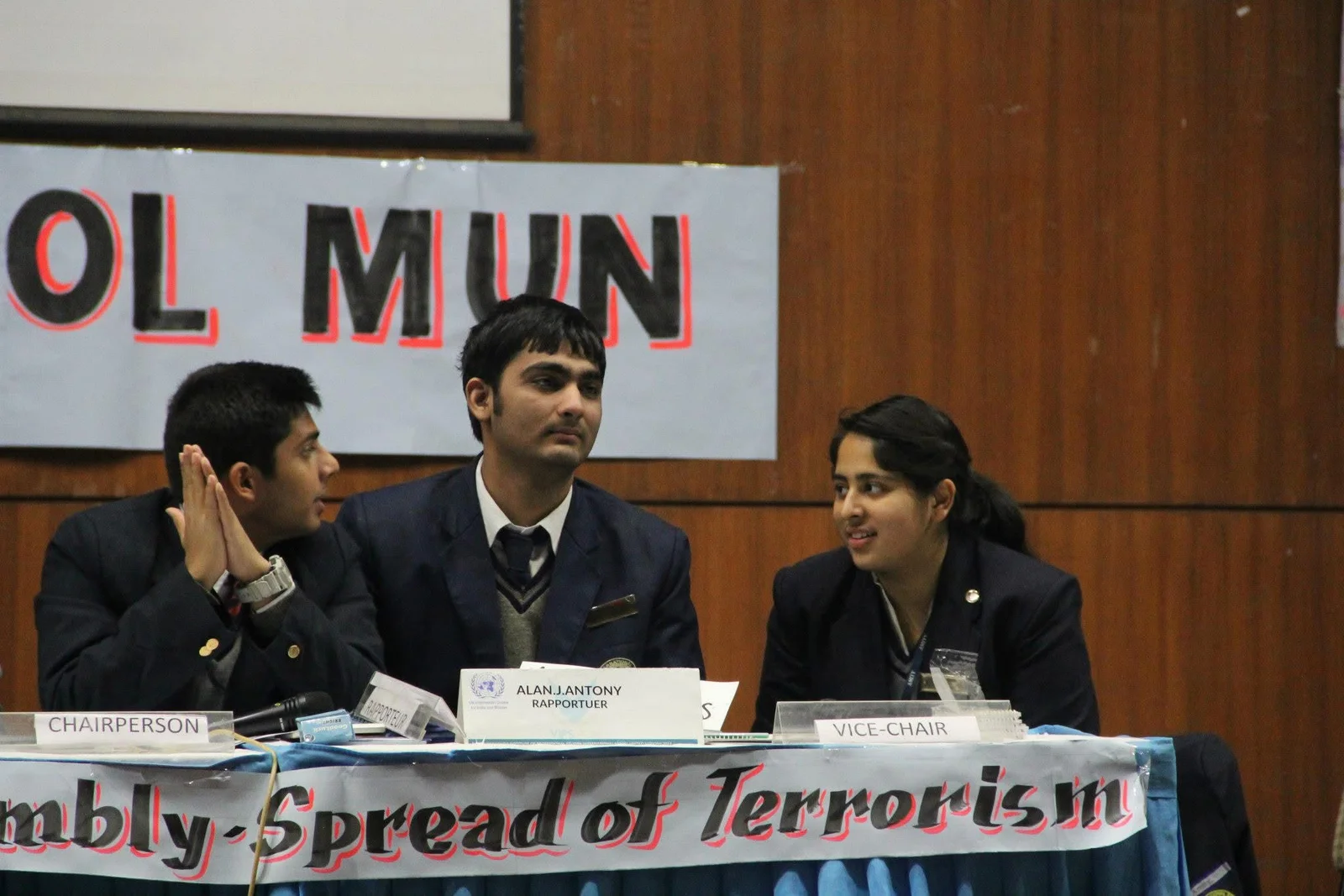
School MUN.
Some assembly required
At HKUST, my team and I built a drone from scratch.
There was an app, mechanics, physics, and people from different majors who understood different parts of the problem. We had to bring those parts together. We also went to China to see factories.
That was the first time I felt that engineering is reality.
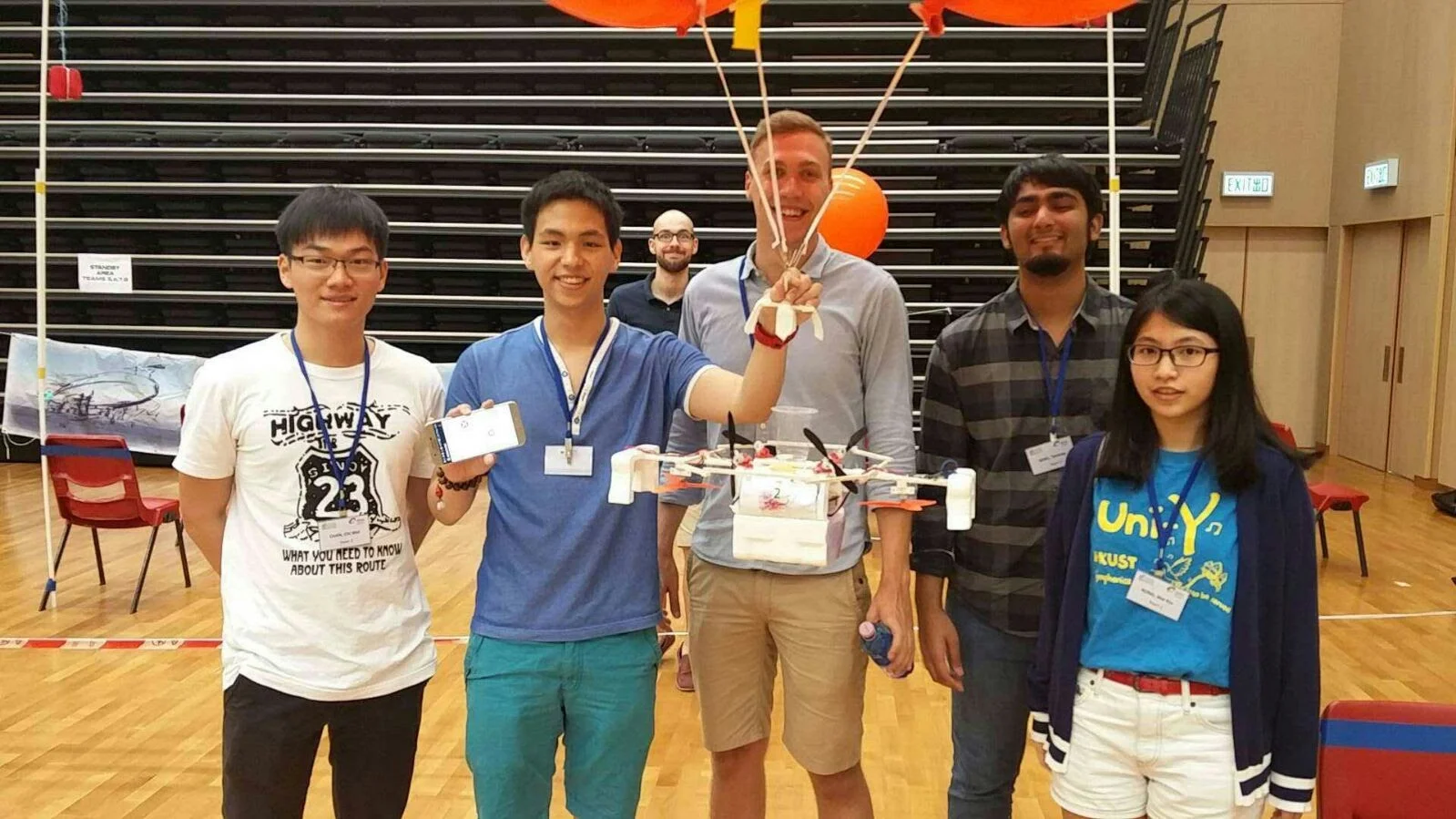
With our project team at HKUST.
I had studied maths and science for years. Here, I could see them becoming something. There was a reason to understand what we were learning, because we were trying to make it work.
We built other things too. A moving machine. A raft to race in a swimming pool. Later, an automatic spice grinder. Fun little things that made ideas reality.
Eventually, we moved towards more software projects. We developed AI song and stock recommendation systems. I built a digital piano. There were final-year projects, and somewhere along the way I learnt music production.
I liked having so many different ways into the material. Music could lead me towards software. A physical thing we wanted to build could make me care about mechanics. Something I understood in one subject could become useful in another.
Our teachers gave us the basics and a problem to solve. We could ask for help when we were stuck, but we had to figure out how to make it work ourselves.
A lot of that happened through the team. We had different skills, and we had to trust each other. I could learn through my own approach while also seeing how someone else approached the same problem.
That freedom mattered to me. There was support available, but there was room to try.
I also took subjects outside engineering. Economics, marketing, classes connecting philosophy with science, and psychology with business. The degree gave me opportunities to follow interests that didn’t fit neatly under computer science.
In economics, we watched Inside Job. It contributed quite effectively to my lack of enthusiasm for entering finance.
In marketing and society, learning about the beef industry and its environmental impact made me think more about climate change. I became interested in the distance between how an industry is marketed and the consequences of what it does.
These classes influenced what I cared about and what I wanted to do. I was forming opinions about the world I would eventually enter, while learning the technical skills to do things in it.
Reading actual books, rather than only textbooks, brought some of the same excitement. I could follow an interest for as long as I wanted. One question could lead to another without needing to stay inside the boundaries of the course.
When I say these experiences brought my curiosity back, I don’t mean I had been entirely incurious before. But curiosity had often lived in particular pockets. At university, I had more opportunities to use it across my education.
I also began to feel what that gave me when I spoke to other people. If you had read about something, tried to build something, or worked through a question yourself, you had something to contribute. You could ask better questions. You could understand more of what a smart person was saying and have a view of your own.
That makes you formidable in a way that knowing the expected answer doesn’t always prepare you for.
The answer key isn’t included
One thing I wish I had brought into college was more confidence.
I mean confidence in my judgment. Being willing to ask a question, attempt something uncertain, and risk being wrong. I had become accustomed to looking for the correct answer. It took time to become comfortable trying things before I knew how they would turn out.
There was a lot of unlearning and rebuilding involved.
I learnt a lot more through doing projects and working with people, especially during my years in Japan. Working alongside people gave me more ways to approach a problem. I could bring what I knew, see what someone else saw, and learn through trying things together.
Through Japan Product Camp, I also got to think about how to create that kind of learning experience for other people.
We wanted people to build products in teams, with mentors from the industry. They would learn from people who had done the work, receive feedback, and have somewhere to apply it.
We didn’t want the experience to consist of sitting through lectures about product management. We wanted participants to try it.
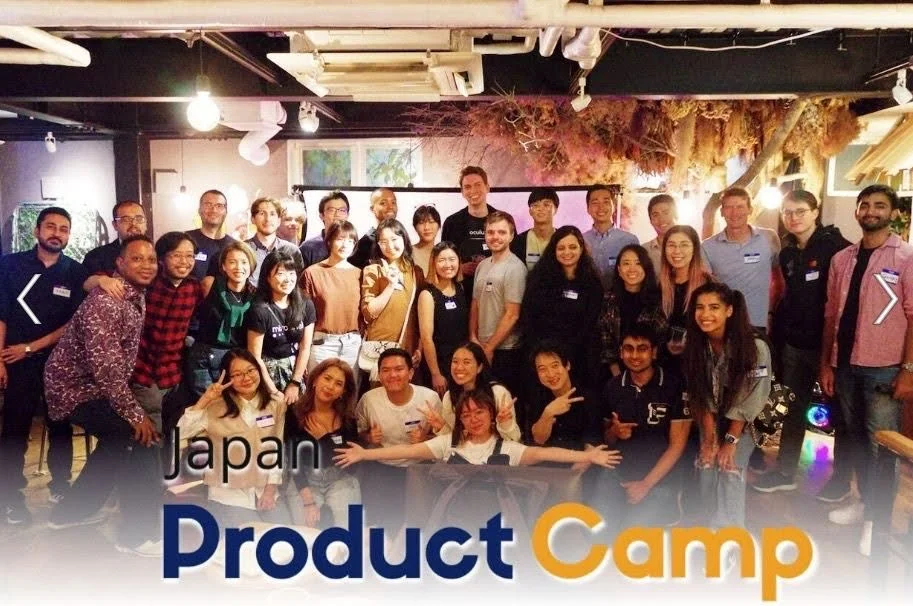
Japan Product Camp.
Through Product Camp, we were trying to create the conditions I had valued in my own education: chances to make things, learn from other people, and ask for help while finding our own way.
I haven’t worked professionally in school education. Helping adults learn product management doesn’t tell me exactly how to design a school for children. But it did give me an opportunity to act on something I believed about learning.
Later, at Kellogg, I was back in the classroom, still learning to make judgments without a clear answer. The case method gave me more practice with that. We could all read the same material and arrive at different conclusions. Other people would notice things I hadn’t considered, or bring experiences that changed how they understood the problem.
You had to listen, think, and decide where you stood.
Design thinking added another way of approaching problems. We tried to understand different perspectives, considered how to respond, and applied what we learnt in real projects. Experiential labs connected learning to work beyond the classroom.
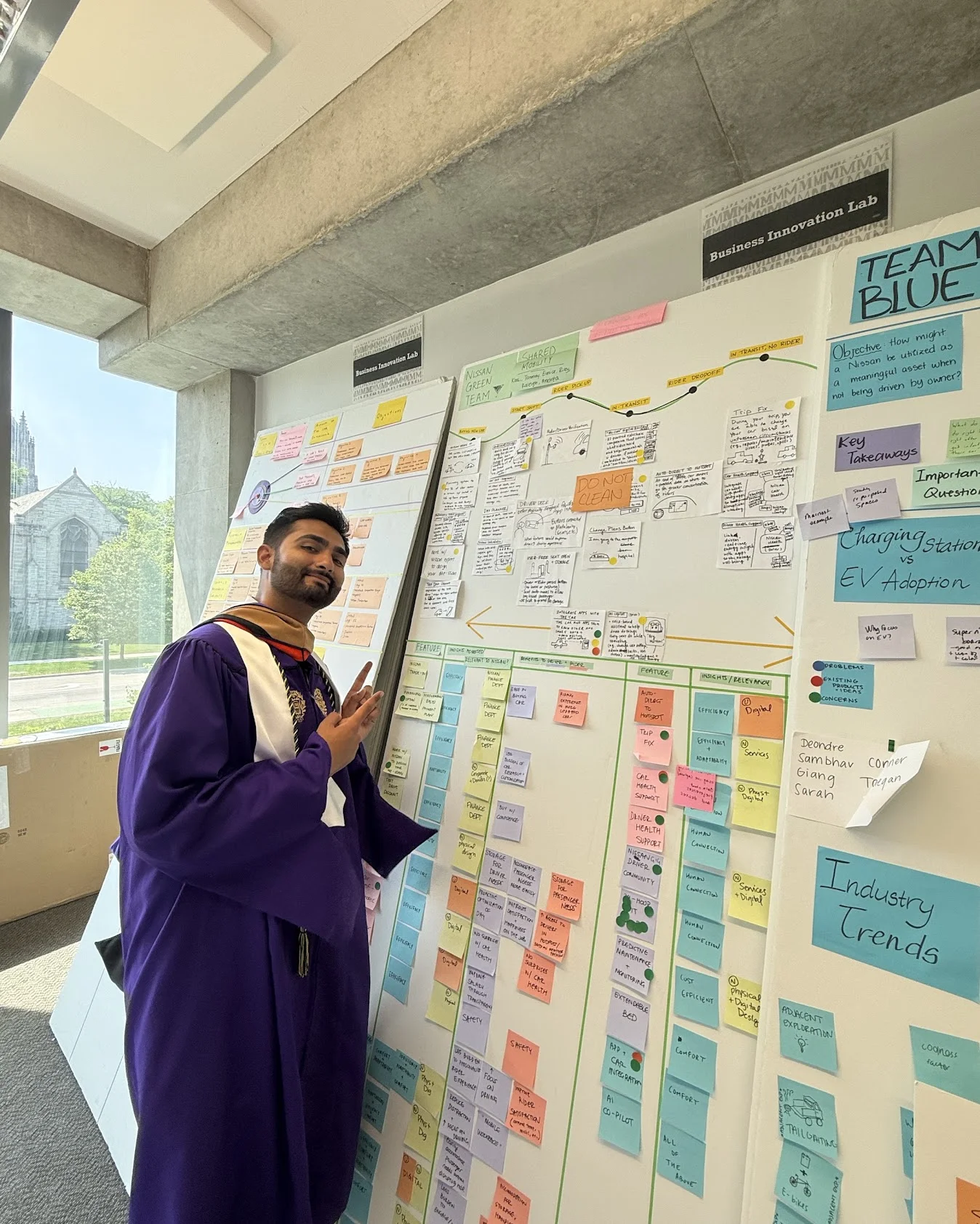
Back with the project boards at Kellogg.
It reminded me of the part of MUN I had valued: having to take another perspective seriously. Years later, in a different setting, I was still discovering how much I could learn by doing that.
Please show your working
None of this means I want to abolish exams.
I hate taking them. I still think they have a place.
Preparing for an exam can build discipline, practice and sustained attention. Sometimes you need to sit with material that doesn’t immediately excite you. You need enough familiarity with a subject to do something useful with it.
I also appreciate aspects of tests like the GMAT and SAT. They have a common standard, and questions can ask you to apply concepts. I would like more of that in assessment.
The issue for me is how much of education can become organised around getting through the next examination.
IIT. Boards. Grades. Admissions.
I understand why students and parents care about these things. They affect the opportunities available afterwards. I cared about them too.
But I worry about what gets squeezed out when they become the main purpose of education. The questions that take too long. The interests that don’t help with admission. The attempt that might fail and leave you with very little to show for the time you spent.
I needed the freedom to spend time on something without knowing the result in advance.
I’d want a combination of assessment methods. Exams can be case-based. Projects can develop over a longer period, with feedback and revision. Students can write about their reasoning, explain what they tried, and examine why something didn’t work.
Getting the answer right matters. I also want to know whether someone understands it well enough to use it when the problem changes.
Writing is another way I’ve learnt to work through a question, and I wish it had received more attention in school.
Paul Graham’s The Age of the Essay helped me understand writing as an attempt to figure something out. He traces how teaching writing became tied to academic literary study, and makes the case for essays that begin with a question rather than a position chosen in advance. The Age of the Essay
Writing gave me a reason to research something properly. I would start with a thought, go looking for more context, and end up down a rabbit hole. The reading would give me more to think about, which would give me more to write about.
Rabbit holes are awesome.
Trying to explain what I think often reveals that I don’t understand it quite as well as I thought. Then I have a reason to keep looking. I like that writing can take me somewhere I hadn’t planned to go, rather than just help me present what I already know.
I want students to have opportunities to do that. Examine a belief. Build an argument. Articulate something clearly, with proper grammar, and consider whether it will make sense to another person.
They should also learn to write for the internet. A useful post, a thoughtful response, a clear explanation. Being able to communicate briefly is a skill worth practising too.
I am aware that I have chosen a fairly long way to arrive at that point.
Full marks. Now what?
When I think about what I wish school had prepared me for, my list extends well beyond academic work.
Mental health. Emotional intelligence. Morality. Relationships. The confidence to pursue an idea. Health and fitness as something I enjoy doing.
I don’t think these can all be solved by introducing another subject and scheduling an exam at the end of it. But I wish they had received more attention while I was growing up.
I wanted more understanding of myself and other people. More practice asking for help, taking responsibility, and dealing with uncertainty. More opportunities to develop empathy through experiences, as I had in MUN.
A lot of that came later, through life itself.
Some learning probably has to happen that way. I don’t expect a school to deliver a fully formed adult at 18. I do wonder whether I could have left better prepared to participate in the process.
In older writing, I had already wished that I had developed healthier habits earlier. I wanted to enjoy physical activity and carry it through my life.
The same goes for music and other interests. These became parts of who I am and ways to enjoy life beyond work. I wish we gave more thought to how students discover those things and have enough time to develop them.
I’m aware that my own path included opportunities many people don’t have. Studying abroad, taking different subjects, travelling, meeting people from different backgrounds. I can’t separate what I learnt from having access to those experiences.
I also don’t think the useful distinction is simply India versus abroad. My school gave me MUN. A project or a case discussion can be done badly anywhere. What interests me is what made particular environments work for me, and how more people could experience those conditions.
I can value the discipline my schooling gave me and still wish I had spent less time afraid to be wrong.
A tutor who never runs out of patience
AI makes me think about all of this again.
I experience it as an on-demand personal tutor. I can ask for an explanation, say I didn’t understand, ask differently, and connect the subject to something I already know. I can follow a question at my own pace.
That would have been extraordinary to have while I was trying to understand the context behind my school subjects.
I see AI as an extension of the internet, which extended the reach of the written word, which carried forward stories and wisdom. We have spent generations finding ways to learn from people beyond our immediate surroundings.
Now we can also get explanations and synthesis shaped around the questions we are asking.
It makes me excited about how much a person can learn and do independently. It also makes me impatient with the idea that we should wait until we have completed every formal step before beginning to apply what we know.
Someone can start experimenting with technology, developing skills and building things while someone else is still trying to get the grades that will eventually give them permission to begin.
I worry about that gap, especially when so much ambition in India goes into cracking entrance exams.
I don’t think the answer is to stop learning fundamentals because AI is available. Depending on a tool for an answer you can’t examine is a strange kind of progress. I want to use it to become more capable, and I can see how easily I could use it to avoid effort instead.
That tension makes the rest of this essay feel more relevant to me. Curiosity gives me a reason to ask. Knowledge helps me understand the response. Judgment helps me question it. Trying something gives me a way to find out whether I understood.
We are superhuman now. We should act like it.
I’m still working out how to use these possibilities well. I want education to respond with some ambition of its own.
When I look back, the experiences that shaped me gave me somewhere to take my questions. Sometimes that was a conference where I had to represent another country. Sometimes it was a team trying to build a drone, a discussion where somebody saw the case differently, or a product receiving feedback from an industry mentor.
I had enough of a starting point to participate, room to find my own way, and people I could learn from.
I’d like more of education to feel like that. I would still have taken the exams. I just wish more of the curiosity had been allowed inside the classroom.